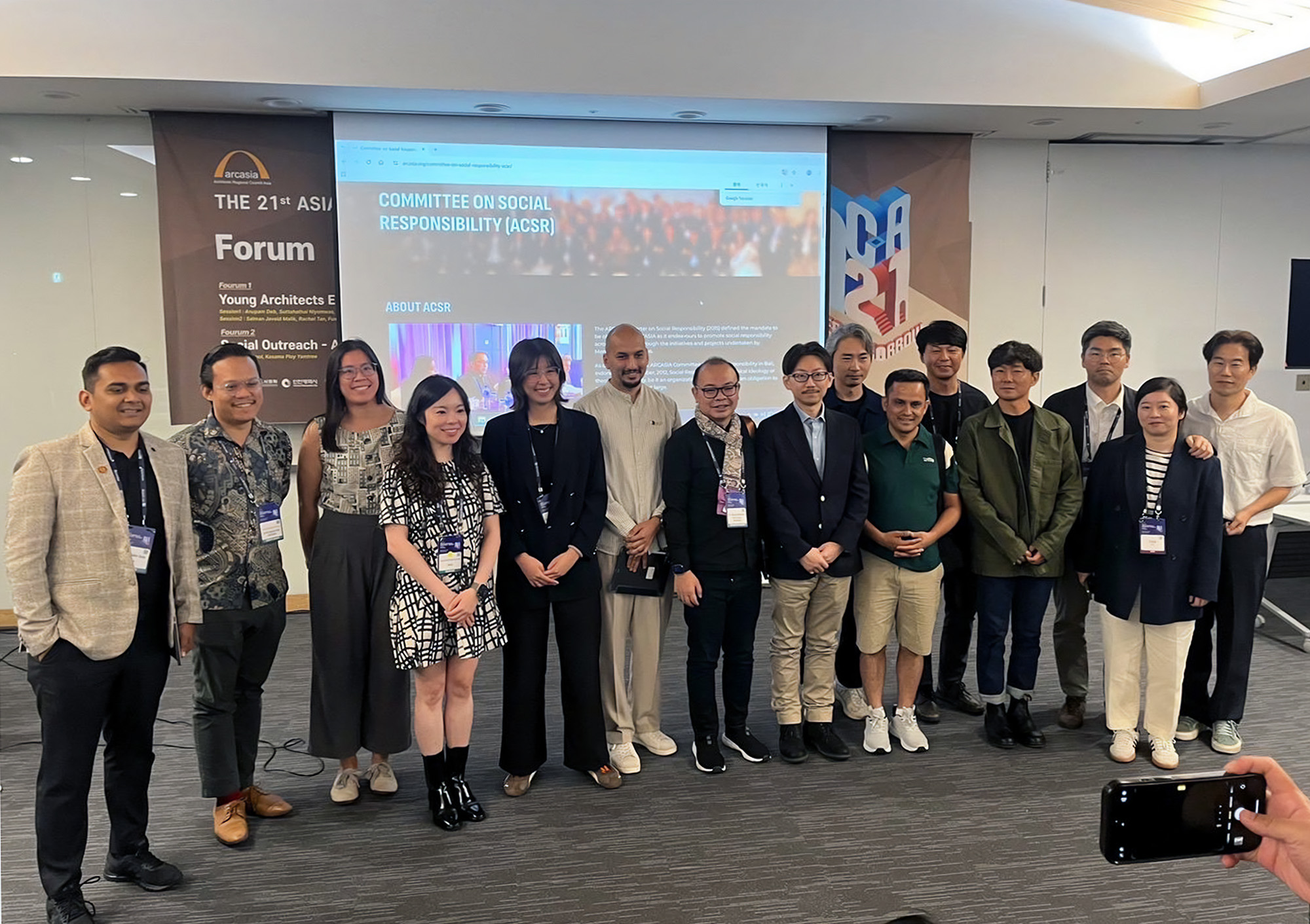
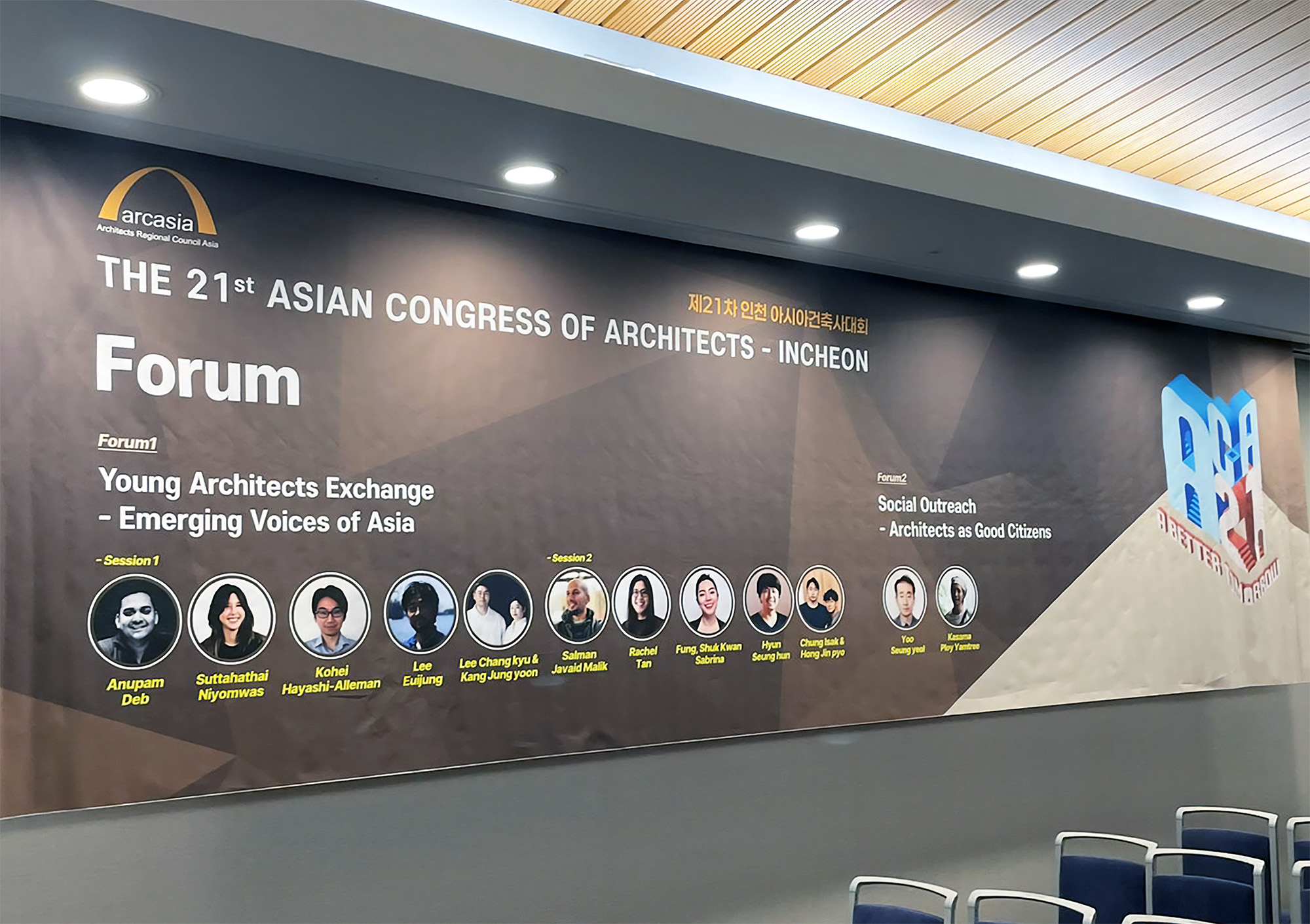
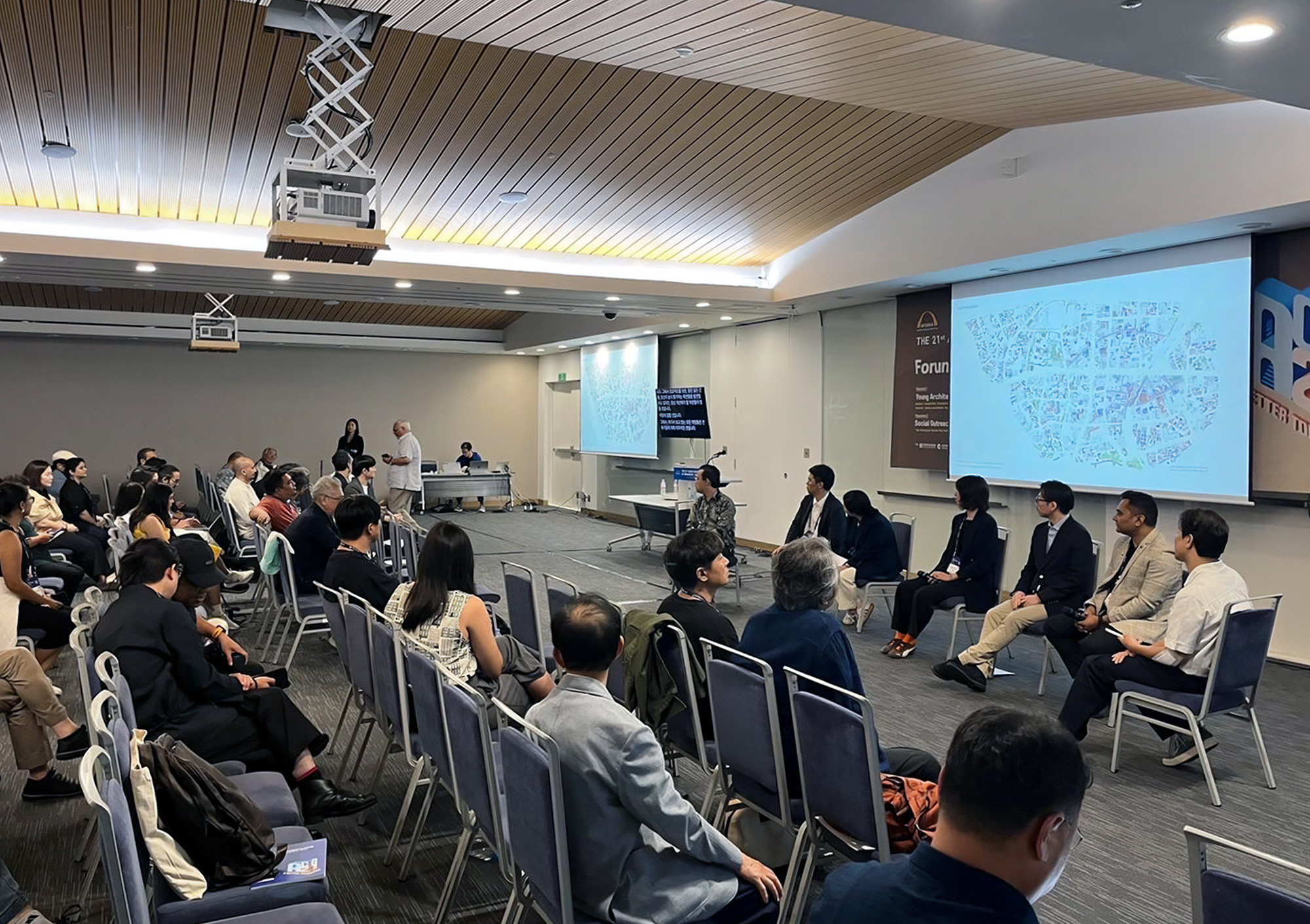
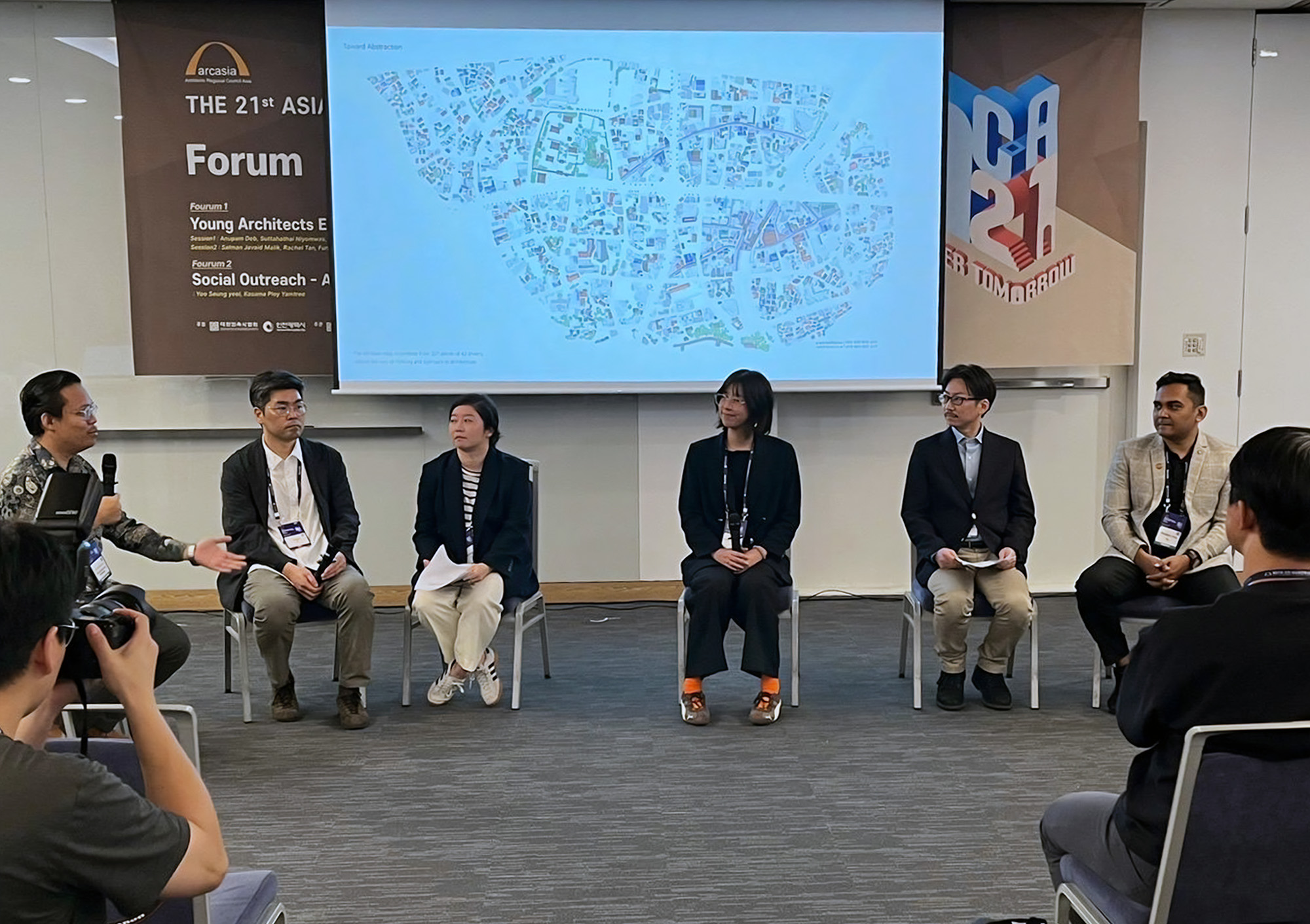
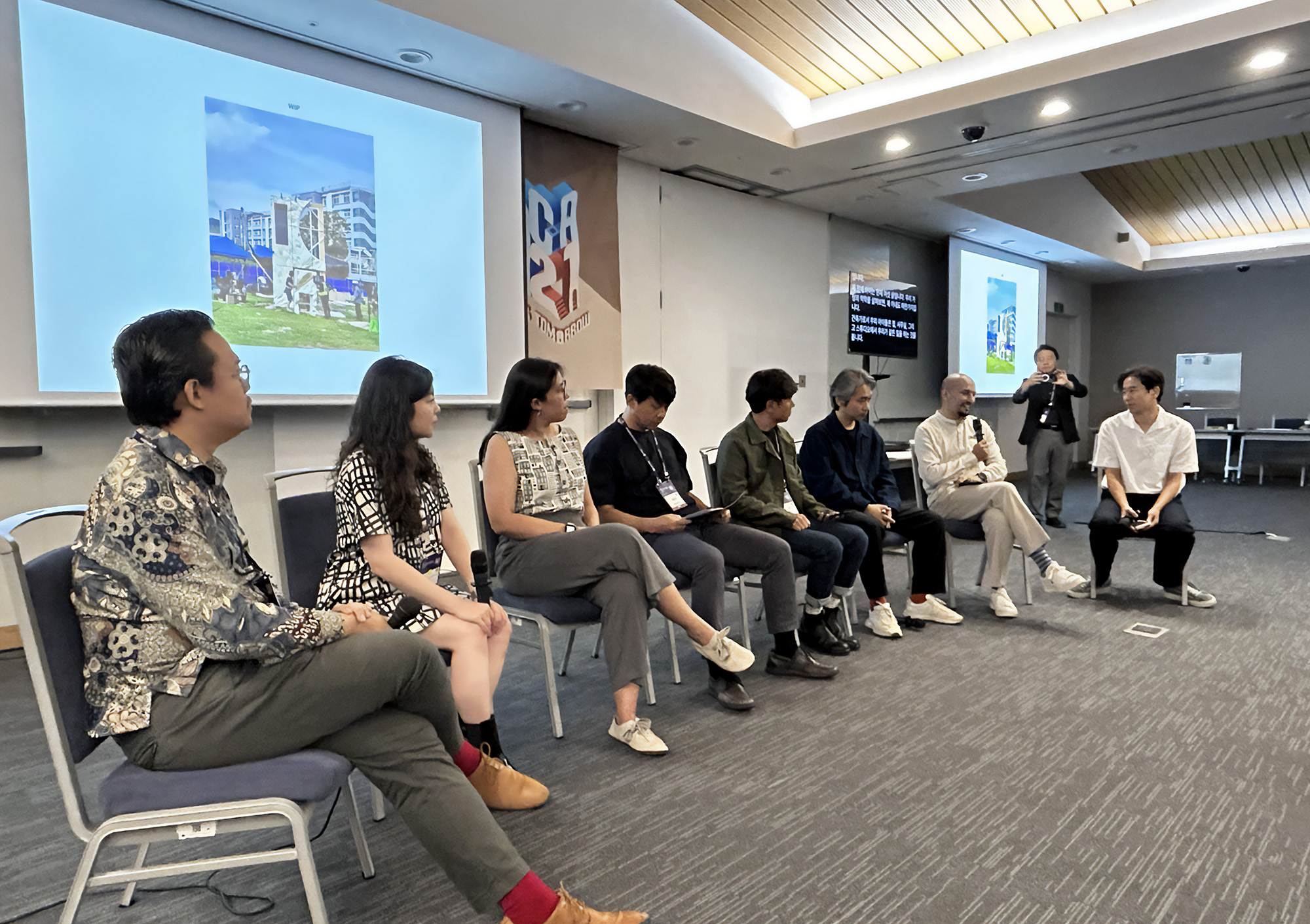
第21 回アジア建築家評議会(ACA21、2025年9月8日-12日)にあわせて、2025年9月12日(金)に大韓建築士協会(KIRA)およびアルカジア若手建築家委員会(ACYA)の共催で、大韓民国・仁川市、仁川コンベンシア1 階イベントホールにて「アジアの新しい声」フォーラムが開催されました。早矢仕アレマン耕平JIA国際委員がレポートします。
KIRA × ACYA 若手建築家交流フォーラム「アジアの新しい声」 早矢仕アレマン 耕平
フォーラム概要
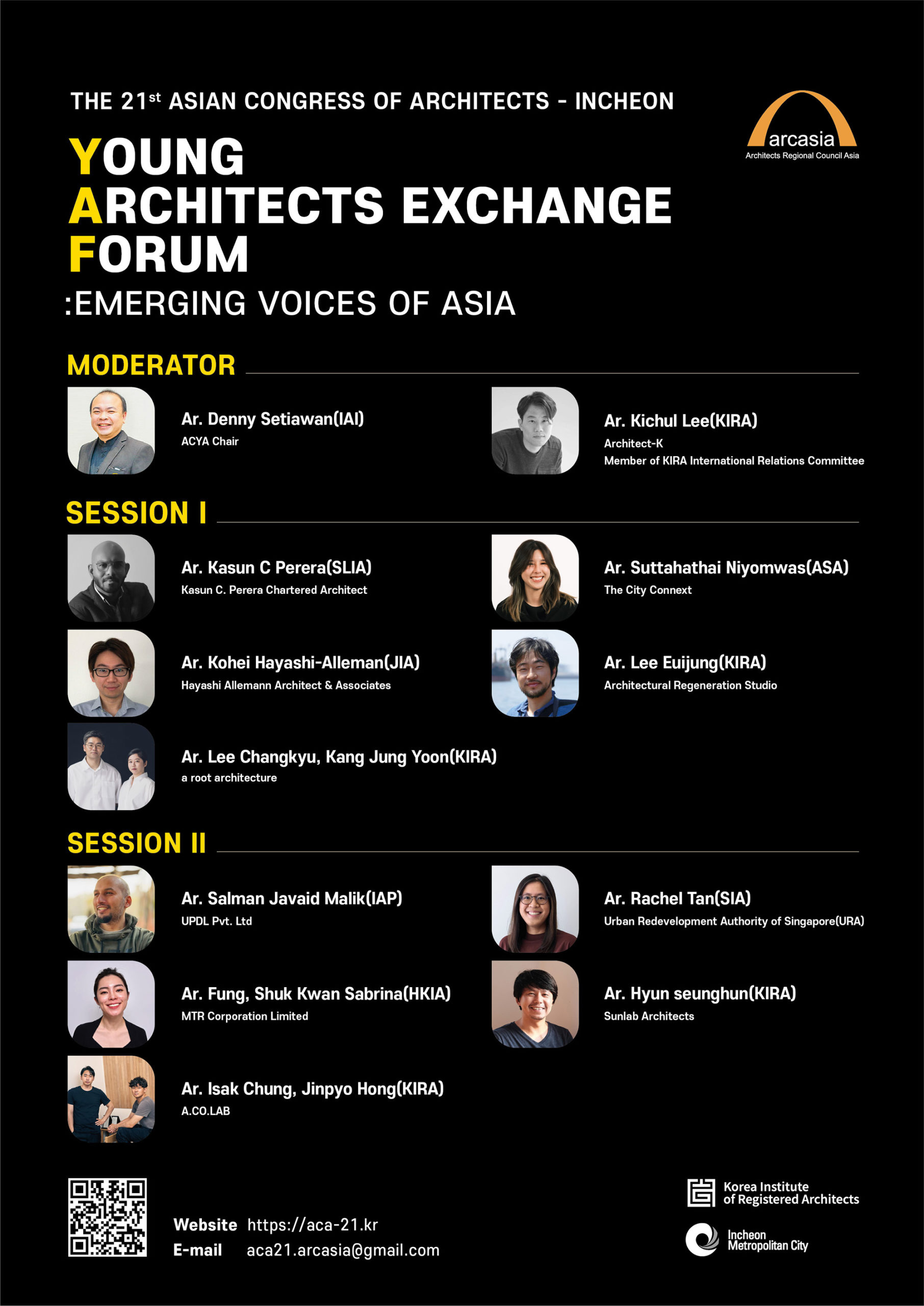
本フォーラムは、「アジアの新しい声」をテーマに、アジア各国の若手建築家が互いの活動と理念を共有し、交流を深めることを目的として企画された。プログラムはセッション1 (13:00 – 14:20)とセッション2(14:30 – 16:00)の二部構成で行われ、アルカジアの各ゾーン(A – C)*から選ばれた男性3 名、女性3 名に加え、韓国から4 組が参加し、計10 組の建築家が登壇した。
*ARCASIA のゾーンは、アジアの地域によって分類される。Zone A(南アジア)にはインド、パキスタン、バングラデシュなど、Zone B(東南アジア)にはシンガポール、インドネシア、マレーシア、フィリピンなど、Zone C(東アジア)には中国、日本、韓国、香港などが含まれる。
各発表者には12 分の発表時間が与えられ、各セッション終了後にはモデレーターおよびオーディエンスとの質疑応答が行われ、活発な意見交換がなされた。また、前日には登壇者へのインタビューおよび座談会が開催され、登壇者同士の意識共有が図られた。
登壇者構成
モデレーター
セティアワン・デニー(ACYA 議長、インドネシア)
ノリシャム・クァワリズミ(ACYA 副議長、マレーシア、QWA Architect)
リ・キチュル(韓国、Architect-K)
セッション1
デブ・アヌパム(インド、Metarch Studios)
ニヨムワス・スッタハタイ(タイ、The City Connext)
早矢仕アレマン・耕平(日本、Hayashi Allemann Kenchiku Atelier)
リ・チャンギュ、 カン・ジュンユン(韓国、a root architecture)
イ・ウイジョン(韓国、Architectural Regeneration Studio)
セッション2
マリク・サルマン・ジャビード(パキスタン、UPDL Pvt. Ltd)
タン・レイチェル(シンガポール、Urban Redevelopment Authority of Singapore)
フォン・シュク・クワン・サブリナ(香港、MTR Corporation Limited)
ヒョン・スンフン(韓国、Sunlab Architects)
チャン・イサク、ホン・ジンピョ(韓国、A.CO.LAB)
発表・討議の概要と所感
各国からの登壇者は、それぞれの社会的・文化的背景に基づいた建築活動を紹介した。
韓国の参加者は、地域再生や行政との協働など、建築を社会変革の手段として捉える実践を数多く提示した。東南アジアの若手建築家は、気候・経済・都市構造といった現実的条件に柔軟な対応し、素材や地域性への深い理解に基づくプロジェクトを紹介していた。筆者は、建築を通じて日本文化を海外に伝える活動の一環として、数寄屋建築の理念に基づき、伝統的な空間感覚や素材の扱いを異文化の文脈で再構築するプロジェクトを紹介した。討議では「建築家の社会的役割」、「地域文化の継承」、「ローカリズムの変容」などが取り上げられ、建築を社会・文化・環境の三者を結ぶ行為として捉える重要性が共有された。
本フォーラムを通じ、アジア各国の若手建築家が置かれた環境や社会的背景の違いを超え、それぞれの立場から主体的に建築の可能性を模索している姿勢に深い感銘を受けた。各地域から選ばれた建築家たちは、それぞれの作品や思想を通して、建築をいかに社会や人々の生活と結びつけてるかを語り合い、異なる文化や価値観が交差する中で、建築が人々の関係性を再構築し、新たな社会像を描き出すための手段であるという確信が共有された。
質疑応答や意見交換の場では、参加者同士の関心が重なり合い、国境を越えた共感と刺激が生まれていた。こうした経験を通して、アジアの建築文化の多様性と同時に、その根底に流れる共通の志向――人間と環境、社会との関係をより良く築こうとする姿勢――を実感した。
今後もこのような動向に目を向け、アジア全体の流れの中で自らの建築の立ち位置を考え続けるとともに、ACYA 委員として積極的に関わり、相互の学びと連携をさらに深めていきたい。「アジアの新しい声」というテーマのもとに展開された本フォーラムは、地域的な差異を超えて建築文化の未来を考える貴重な機会であり、今後の国際的な協働や文化的連携の可能性を示す、意義深い対話の場となった。
(早矢仕アレマン耕平/JIA 国際委員, ACYA 委員 )
In conjunction with the 21st Asian Congress of Architects (ACA21: September 8-12, 2025), the “Emerging Voices of Asia” forum was held on Friday, September 12, 2025, at Incheon Convensia (Ground Floor, Event Hall) in Incheon, South Korea, co-hosted by KIRA and the ACYA. Ar. HAYASHI-ALLEMANN Kohei, JIA International Relations Committee Member, will present the report.
Young Architects Exchange Forum : Emerging Voices of Asia HAYASHI-ALLEMANN Kohei
Forum Overview
The forum, themed “Emerging Voices of Asia,” was organised to provide young architects from across
Asia with the opportunity to share their activities and philosophies and to deepen mutual exchange.
The program was divided into Session 1 (13:00 – 14:20) and Session 2 (14:30 – 16:00), featuring a total of
10 architects: three male and three females selected from each ARCASIA zone (A – C), plus four groups
from Korea.
Each presenter had 12 minutes, followed by a Q&A session with moderators and the audience that fostered lively discussion. Additionally, interviews and roundtable discussions were held the day before, fostering mutual understanding among presenters.
Participants
Moderators
Ar. Denny SETIAWAN (ACYA Chair, IAI)
Ar. Qhawarizmi NORHISHAM (ACYA Vice-Chair, PAM, QWA Architect)
Ar. LEE Kichul (KIRA, Architect-K)
Session 1
Ar. Anupam DEB (India, Metarch Studios)
Ar. Suttahathai NIYOMWAS (Thailand, The City Connext)
Ar. HAYASHI-ALLEMANN Kohei (Japan, Hayashi Allemann Kenchiku Atelier)
Ar. LEE Changkyu, Ar. KANG Jung Yoon (Korea, a root architecture)
Ar. LEE Euijung (Korea, Architectural Regeneration Studio)
Session 2
Ar. Salman Javaid MALIK (Pakistan, UPDL Pvt. Ltd)
Ar. Rachel TAN (Singapore, Urban Redevelopment Authority of Singapore)
Ar. FUNG Shuk Kwan Sabrina (Hong Kong, MTR Corporation Limited)
Ar. HYUN Seunghun (Korea, Sunlab Architects)
Ar. CHUNG Isak, Ar. HONG Jinpyo (Korea, A.CO.LAB)
Presentations, Discussions, and Impressions
Presenters from each country introduced their architectural activities based on their respective social and
cultural contexts.
Korean participants showcased numerous projects emphasizing regional regeneration and collaboration
with government, viewing architecture as a means of social transformation. Young architects from Southeast Asia highlighted projects that responded flexibly to climatic, economic, and urban conditions, demonstrating a deep understanding of materials and local context. The author presented projects conducted overseas as part of efforts to convey Japanese culture through architecture. Based on the principles of Sukiya-style architecture, these projects explore how traditional spatial sensibilities and material use can be reinterpreted in different cultural contexts, highlighting architecture as a medium for cultural exchange. Discussion topics included the social role of architects, preservation of local culture, and transformation of regionalism, emphasizing the importance of viewing architecture as a practice connecting society, culture, and the environment.
It was highly insightful to observe young architects from across Asia proactively exploring architectural
possibilities, transcending differences in environment and social context. Participants shared how their
works and philosophies link architecture with society and daily life. There was also a shared recognition
among them that architecture can help restructure human relationships and envision new forms of society.
Q&A sessions and discussions fostered overlapping interests, generating cross-border empathy and
inspiration. These experiences highlighted both the diversity of Asian architectural cultures and the underlying shared commitment to fostering better relationships among humans, the environment, and
society.
Looking forward, the author intends to continue observing these trends, considering the position of his own architectural practice within the broader Asian context, and actively contributing as an ACYA committee member, deepening mutual learning and collaboration. The forum, held under the theme “Emerging Voices of Asia,” provided a valuable opportunity to consider the future of architecture beyond regional differences and demonstrated the potential for international cooperation and cultural exchange.
(HAYASHI-ALLEMANN Kohei, JIA International Relations Committee Member, ACYA Committee Member)